Template by:
Free Blog Templates

Friday, May 22, 2009

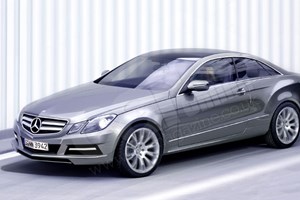
Mercedes E-class coupe (2009) revealed


Mercedes-Benz will set the cat among the pigeons with its new CLK replacement – badged the E-class Coupe and in a showroom near you by June 2009. CAR's artist's impressions reveal that the mid-sized coupe will borrow heavily from the look of the recent Fascination concept car, the star of Merc's stand at the Paris motor show.

The E-class Coupe will be shown formally at the Geneva motor show in spring 2009, with UK sales starting soon after. The coupe market has fragmented in recent years, but the new E is aimed squarely at the Audi A5 and rumoured future coupe version of the Jaguar XF.

It's too early to predict prices, but by rebadging the CLK as an E-class we expect the showroom numbers will creep upwards. We'd predict a starting price hovering around £32,000 in today's money.

Mercedes-Benz E-class Coupe: the lowdown


CAR has followed the E-class Coupe's development closely over the past few years, with numerous next-gen CLK scoops. The project is codenamed C206 (coupe) and A206 (the convertible, due six months after the tin-top) and the engineering boffins have dipped into the parts matrix of both the latest C-class and the new 2009 E-class saloon.

That spells a classic Merc package: rear-wheel drive, a pedigree choice of four-, six- and eight-cylinder engines and the very latest in technical goodies from Stuttgart's Q department. Not too many, mind you – Mercedes is throttling back on some of the innovations that made current E-class owners a tad too familiar with their local dealers.

Lancia Delta 2009

2002 Ford Thunderbird

2002 Ford Thunderbird Front Passenger Side View

One Year Test Verdict: 2002 Ford Thunderbird

Proudly serving its heritage

With so many bland copycat machines crowding driveways and freeways alike, it's refreshing to see an automotive giant like Ford prioritize design and heritage as much as it did with the 2002 Thunderbird. It was this iconic American design, along with a smooth ride, V-8 power, high-quality convertible top, and value-packed sticker price, that got it named the Motor Trend 2002 Car of the Year.

Winning the Golden Calipers results in automatic inclusion into our One-Year Test program, which gave us a genuine opportunity to log numerous road miles in this Torch Red two-seater. Somewhat unusual for a car entering our long-term fleet, this T-Bird came to us with over 9000 miles already on the odometer. Availability of Ford's new 'Bird was thin, and not wanting to wait months to take delivery of a factory-fresh car, we agreed to accept one that had been around the block a few times. Prior to our delivery, Ford serviced the car and replaced the tires, effectively resetting the odometer to the extent possible.

Our Premium-model Thunderbird's base price of $38,465 included red leather inserts on the bucket seats and a paint-matching porthole-window hardtop (a $2500 option on deluxe models). Also standard were 17-inch chromed alloy wheels, power folding top, a six-disc in-dash CD changer, and a five-speed automatic transmission. The only option was an $800 red interior accent package; add $530 for destination charges, and the bottom line just nipped the $40K mark at $39,795.

The T-Bird proved an excellent conversation starter everywhere it went. Nearly every editor made logbook entries about the questions and comments they received from perfect strangers while filling up the gas tank, parking, or simply backing out of their driveways. Some admirers just wanted to catch a closer glimpse, while others fired off remarks about its price, performance, and retro styling. The only common complaint was that the wheels' design and finish looked cheap and didn't measure up to the rest of the car.

While the exterior of our 'Bird received many compliments in the logbook, the interior stirred considerable controversy among our staff. Some praised the high-quality materials, thoughtful color accents, and retro-look gauge cluster. Editor Stone wrote that he "loves that Ford didn't short-sheet the aluminum trim; this is real aluminum, not aluma-look plastic." On the other hand, some staffers speculated that Ford spent most of its design budget on the exterior styling, therefore having to skimp on the look and feel of the interior. Editor Sessions noted that, "it's painfully evident that the interior got sloppy seconds from the Lincoln LS." While it's true that the dash, steering column, instrumentation, and center stack were borrowed from the LS, sharing parts is the only cost effective way to get certain products to market.

2002 Ford Thunderbird
Price Range:
$10,650.00 - $19,000.00

2006 Ferrari 575 Maranello

2006 Ferrari Superamerica Overhead Front Drivers Side View

First Drive: 2006 Ferrari Superamerica

Open Fire: With a top speed of nearly 200 mph, it's the fastest production convertible in the world. How come the rich guys get all the fun?

And there you are, at the wheel of a brand-new Ferrari road car in Monaco, a week before the annual Grand Prix, mixing it up with traffic on the actual Formula 1 circuit (the guardrails are up, the grid lines are painted, but the streets are still open to the public). Suddenly, ahead looms the famed seaside tunnel. The traffic momentarily clears. Do you: (A) immediately turn around, park the Ferrari, and attempt to find a spa where you can soak your feet in Chanel No. 5; (B) allow the tiny Smart car behind you to pass because, well, he has three cylinders, you have 12, and in France it is glorious to be a martyr; or (C) paddle-shift the Ferrari's semi-automatic gearbox down into first, stand on the throttle, and blitz through that illustrious tunnel like you'll never, ever get a chance like this again--the unbelievable wail of 533 redlined horses ricocheting off the walls, the brutally quick F1 gear changes shocking the air like lightning strikes, the tourists diving for cover, the flabbergasted gendarmes reaching for their automatic machine guns?

So did we.

Few automobiles shine in a dark tunnel like this new Ferrari. Not only does its 48-valve, 5.7-liter V-12 kick out a scream that could make a bear wet its pants, but, thanks to its open top--an innovative, rotating, variably transparent glass roof dubbed "Revocromico"--every decibel of that electrifying combustion-chamber music finds its way to your tympanic membranes.

The new car is called the Superamerica. Is that a great name, or what? It's as brazen and comic-book perfect as "Captain Fantastic" or "Speed Racer." And, yes, this is a car that could get away with a giant "S" on its hood: It's an even more potent, alfresco version of the awesome 575M Maranello. In fact, pointing to a top speed of nearly 200 mph, Ferrari claims the Superamerica is now the fastest production convertible in the world.

The tifosi in the audience will recall that Ferrari has built Superamericas before. The original, a more powerful successor to the early-1950s Ferrari America models (named to honor the increasingly important U.S. market), made its debut in the mid-1950s as the V-12-powered 410 Superamerica. In 1959 followed the updated 400 Superamerica, available in coupe and convertible styles. Enzo Ferrari himself called the Superamerica series "the chinchilla among automobiles." And, no, in making a comparison with furry little rodents, Il Commendatore had not been dipping too deeply into the Lambrusco. Rather, he was poetically associating his limited-edition (the company built fewer than 90 Superamericas), topline luxury GTs with smoky Cote d'Azur casinos, vintage champagne served in gleaming crystal, and--of course--breathtaking women draped in diamonds and fabulous pelts.

Get a free and easy new car price quote in minutes.

2009 Corvette ZR1

2009 Corvette ZR1 Powered By The Most Powerful Production Engine Ever From GM

December 20th, 2007 by Derek

2009 Corvette ZR1 Powered By The Most Powerful Production Engine Ever From GM: The Supercharged LS9 Small-Block V-8

2009 Corvette ZR1

PONTIAC, Mich. – When it arrives next summer, the 2009 Chevrolet Corvette ZR1 will be the most powerful and fastest production car ever produced by General Motors, with performance enabled by a new, supercharged 6.2L LS9 small-block V-8 engine.

Incorporating the engineering experience already found in the Corvette Z06’a LS7 engine and the new-for-2008 6.2L LS3 of the Corvette, GM Powertain is targeting 100 horsepower per liter for the LS9, or 620 horsepower (462 kW), and approximately 595 lb.-ft. of torque (807 Nm); final SAE-certified power levels will be available in early March 2008.

It is, indeed, the ultimate small-block engine for the ultimate Corvette.

“When you experience the LS9 in the Corvette ZR1, the terms performance and refinement take on a new meaning,” said Tom Stephens, group vice president for GM Powertrain and Quality. “The LS9 demonstrates an outstanding performance range, with smooth driveability at low speeds, and surprisingly fierce performance when the customer wants more power.”

The enabler of the LS9’s performance is a new, large positive-displacement Roots-type supercharger – with a unique four-lobe design – developed for the engine by Eaton. It is teamed with an integrated charge cooling system that reduces inlet air temperature for maximum performance. The LS9 represents the first of several new, supercharged small-block engines that will be introduced in GM vehicles in the near future, each using superchargers of similar design.

“The small-block V-8 once again demonstrates it boundless horsepower potential, versatile design and an architecture with proven quality, durability and reliability,” said Stephens. “We haven’t yet realized the small-block’s performance potential.”

LS9 Corvette Engine

Performance range

More than just its tremendous peak horsepower and torque numbers, the supercharged LS9 makes big power at lower rpm and carries it in a wide arc to 6,600 rpm. GM Powertrain testing shows the engine makes approximately 300 horsepower (224 kW) at 3,000 rpm and nearly 320 lb.-ft. of torque (434 Nm) at only 1,000 rpm. Torque tops 585 lb.-ft. (793 Nm) at about the 4,000-rpm mark, while horsepower peaks at 6,500 rpm. The engine produces 90 percent of peak torque from 2,600 rpm to 6,000 rpm.

Heavy-duty and lightweight reciprocating components enable the engine’s confident high-rpm performance, while the large-displacement Eaton supercharger pushes enough air to help the engine maintain power through the upper levels of the rpm band.

“The sixth-generation design of the supercharger expands the ‘sweet zone’ of the compressor’s effectiveness, broadening it to help make power lower in the rpm band,” said Ron Meegan, assistant chief engineer. “To put it simply, the low-end torque is amazing.”

The LS9 is assembled by hand at GM’s Performance Build Center, a unique, small-volume engine production facility in Wixom, Mich., that also builds the Corvette Z06’s LS7 engine and other high-performance GM production engines.

Cylinder block and reciprocating assembly details

The LS9’s aluminum cylinder block features steel, six-bolt main bearing caps, with enlarged vent windows in the second and third bulkheads for enhanced bay to bay breathing. Cast iron cylinder liners – measuring 4.06 inches (103.25 mm) in bore diameter – are inserted in the aluminum block and they are finish-bored and honed with a deck plate installed. The deck plate simulates the pressure and minute dimensional variances applied to the block when the cylinder heads are installed, ensuring a higher degree of accuracy that promotes maximum cylinder head sealing, piston ring fit and overall engine performance.

Nestled inside the cylinder block is a forged steel crankshaft that delivers the LS9’s 3.62-inch (92 mm) stroke. It features a smaller-diameter ignition-triggering reluctor wheel and a nine-bolt flange – the outer face of the crankshaft on which the flywheel is mounted – that provides more clamping strength. Other non-supercharged 6.2L engines, such as the base Corvette’s LS3, have a six-bolt flange. A torsional damper mounted to the front of the crankshaft features a keyway and friction washer, which also is designed to support the engine’s high loads.

Attached to the crankshaft is a set of titanium connecting rods and forged aluminum pistons, which, when combined with the cylinder heads, delivers a 9.1:1 compression ratio. This combination is extremely durable and lightweight, enabling the LS9’s high-rpm capability.

Cylinder head details

The basic cylinder head design of the LS9 is similar to the L92-type head found on the LS3 V-8, but it is cast with a premium A356T6 alloy that is better at handling the heat generated by the supercharged engine – particularly in the bridge area of the cylinder head, between the intake and exhaust valves.

In addition to the special aluminum alloy, each head is created with a rotocast method. Also known as spin casting, the process involves pouring the molten alloy into a rotating mold. This makes for more even distribution of the material and virtually eliminates porosity – air bubbles or pockets trapped in the casting – for a stronger finished product.

Although the heads are based on the L92 design, they feature swirl-inducing wings that are cast into the intake ports. This improves the mixture motion of the pressurized air/fuel charge. The charge enters the combustion chambers via titanium intake valves that measure 2.16 inches (55 mm) in diameter. Spent gases exit the chambers through 1.59-inch (40.4 mm) hollow stem sodium-filled exhaust valves. The titanium intake and sodium-filled exhaust valves are used for their lightweight and high-rpm capability.

To ensure sealing of the pressurized engine, unique, four-layer steel head gaskets are used with the LS9’s heads.

Camshaft and valvetrain

The broad power band enabled by the LS9’s large-displacement supercharger allows it to make strong low-end torque and great high-rpm horsepower, which allowed engineers to specify a camshaft with a relatively low lift of 0.555-inch (14.1 mm) for both the intake and exhaust valves. This low-overlap cam has lower lift and slower valve-closing speeds than the Z06’s 505-horsepower (377 kW) LS7, helping the LS9 – with its approximately 620 horsepower – deliver exemplary idle and low-speed driving qualities.

The camshaft actuates a valvetrain that includes many components, including the lifters, rocker arms and valve springs, of the LS3 engine. However, LS7 retainers are used to support the engine’s high-rpm performance.

Supercharger and charge cooler details

LS9 Corvette EngineThe LS9’s R2300 supercharger is a sixth-generation design from Eaton, with a case that is specific to the Corvette application. The supercharger features a new four-lobe rotor design that promotes quieter and more efficient performance, while its large, 2.3-liter displacement ensures adequate air volume at high rpm to support the engine’s high-horsepower aspiration. Maximum boost pressure is 10.5 psi (0.72 bar).

The supercharger is an engine-driven air pump that contains a pair of long rotors that are twisted somewhat like pretzel sticks. As they spin around each other, incoming air is squeezed between the rotors and pushed under pressure into the engine – forcing more air into the engine than it could draw under “natural” aspiration. The rotors are driven by a pulley and belt that are connected to the engine’s accessory drive system.

Because the pressurized air is hotter than naturally aspirated air, the LS9 employs a liquid-to-air charge cooling system to reduce inlet air temperature after it exits the supercharger – reducing the inlet air temperature by up to 60 degrees C (140 F). Cooler air is denser and allows the engine to make the most of its high-pressure air charge. The charge cooling system includes a dedicated coolant circuit with a remote-mounted pump and reservoir.

The design of the supercharger case and its integrated charge cooling system was driven by the space and dimensions afforded under the Corvette’s hood. To that end, the charge cooler was designed as a “dual brick” system, with a pair of low-profile heat exchangers mounted longitudinally on either side of the supercharger. Coupled with the supercharger itself, this integrated design mounts to the engine in place of a conventional intake manifold and is only slightly taller than a non-supercharged 6.2L engine. The air inlet and rotor drive pulley are positioned at the front of the supercharger.

Additional engine details

Oiling system: The LS9 uses a dry-sump oiling system that is similar in design to the LS7’s system, but features a higher-capacity pump to ensure adequate oil pressure at the higher cornering loads the ZR1 is capable of achieving. An oil-pan mounted oil cooler is integrated, too, along with piston-cooling oil squirters located in the cylinder block. The expanded performance envelope of the Corvette ZR1 required changes to the dry sump system also used in the Z06. System capacity is increased and scavenge performance improved to meet the demands of Chevrolet’s highest-performance sportscar.

Water pump: To compensate for the heavier load generated by the supercharger drive system, an LS9-specific water pump with increased bearing capacity is used.

Accessory drive system: In order to package the accessory drive system in the Corvette’s engine compartment, the supercharger drive was integrated into the main drive system. This required a wider 11-rib accessory drive system to be used with the LS9 in order to support the load delivered by the supercharger.

Fuel system: The LS9 uses high-capacity 48-lb./hr. fuel injectors with center-feed fuel lines. The center feed system ensures even fuel flow between the cylinders with less noise. In order to ensure fuel system performance during low speed operation as well as under the extreme performance requirements of wide open throttle (WOT), a dual pressure fuel system was developed. This system operates at 250 kPa at idle and low speed, and ratchets up to 600 kPa at higher-speed and WOT conditions.

Throttle body: An 87-mm, single-bore throttle body is used to draw air into the engine. It is electronically controlled.

Rocker covers / ignition coils: Unique rocker covers with new, direct-mount ignition coils are used. Other Gen IV engines, such as the LS3, feature coil packs mounted to a bracket. The LS9’s direct-mounted coils offer a cleaner appearance and a shorter lead between the coil and spark plug.

Beauty cover: A special engine cover is attached to the top of the LS9. It surrounds the intercooler, which is visible through a hood window, accenting the supercharger while simultaneously reducing noise. The cover has “LS9 SUPERCHARGED” script on the left and right sides, along with a debossed Corvette crossed flags emblem on the front.

New six-speed manual transmission

The Corvette ZR1’s LS9 engine is backed by a Tremec TR6060 six-speed manual transmission, with a twin-disc clutch system. It is based on the proven T56 six-speed, but upgraded to handle the LS9’s torque output and delivers improved shift quality

The twin-disc clutch system provides exceptional clamping power, while maintaining an easy clutch effort. The system employs a pair of 260-mm discs, which spreads out the engine’s torque load over a wider area, enabling tremendous clamping power to channel the LS9’s torque. It also dissipates heat better and extends the clutch life (in normal driving).

Thanks to comparatively small plates, the twin-disc system enables similar disc inertia to the Corvette Z06, which has a 290-mm single-disc system, contributing to low shift effort and providing exceptionally smooth engagement and light pedal effort. In fact, the more powerful ZR1 has a pedal effort similar to the Z06.

ZR1-specific gearing in the transmission provides a steep first-gear ratio that helps launch the car. The car’s top speed is achieved in sixth gear – a change from the fifth-gear top-speed run-outs in the manual-transmission Corvette and Corvette Z06. The gears also are designed to balance performance with refinement. The angles of the gear teeth are optimized to provide both strength and quietness.

2009 Corvette ZR1

2009 Corvette ZR1

###

Source:
Tom Read and Susan Garavagalia
GM Powertrain Communications

2009 Acura RL

2009 Acura RL Front Three Quarters View

Quick Drive: 2009 Acura RL


What: Substantial midlife update for Acura's flagship sedan.

What's new: Revised AWD system, more powerful engine, styling.

What's Hot: Torque-vectoring all-wheel drive. Audio/navigation system. Styling of everything but the grille.

What's Not: Steering feel and feedback. Configuring of Bluetooth via voice control. Front grille.

How Much: Base price, $47,040; As tested, $54,460

On the Road:
The previous-generation RL faced some challenges. In a market dominated by V-8-powered sport sedans, the RL offered a V-6 and sedate styling. It fell outside consumers' minds, and sales trailed behind rivals. Acura has updated and adapted the RL by increasing horsepower (although there are still only six pistons firing under the hood), fine-tuning the all-wheel-drive system, and radicalizing the styling, to say the least.

The 2009 RL is comfortable and quiet and comes equipped with a bevy of features standard, keeping with Acura's philosophy of short options lists. Underhood rests an SOHC 3.7L V-6 with VTEC on intake and exhaust valves. The engine is smooth while circling its 300-hp powerband and returns 16/22 city/highway mpg. It's mated to a five-speed transmission; six speeds forward is more common in this class now, but the ratios are spot on and the powerband is wide, so there's no downside to being short one cog.

2009 Acura RL Side View

That transmission is connected to Acura's SH-AWD system, another standard feature on the RL. It's a slick piece of drivetrain engineering that, during aggressive cornering, can send up to 70% of the available 271 lb-ft of torque to either rear wheel. To combat understeer, electromagnetic clutch packs in the rear are capable of overdriving the outside rear wheel. This creates yaw and, as a result, makes for a neutral driving sensation, although mild understeer is still evident at the limit.

Steering is an electrically assisted, variable-ratio rack-and-pinion affair. The variable ratio is nice, but the tradeoff is a loss of sensation through the wheel. Turn-in feels vague, as if the steering wheel doesn't share a mechanical connection to the front wheels. Not helping is the RL's large 39.7-ft turning radius, which is greater than even the Chevrolet Tahoe's 39.0 ft.

Price Range: $46,680 - $50,300

2010 Lexus IS

2010 Lexus IS C Front Three Quarters View

First Drive: 2010 Lexus IS C

Reaching for the Sky: Taking Further Aim at the BMW 3 Series
text size
By Matt Stone

This just in: Lexus is serious about claiming more of BMW's turf. When introduced nearly a decade ago, the IS 300 was a single-focus effort: one body style, one engine, take it or buy the BMW. The second-gen IS, launched in 2005, widened the view: two engines plus an all-wheel-drive version, but still served only in four-door-sedan form. Last year came the roaring, rumbling IS-F, Japan's take on the M3. And now, the IS C, the first IS with two doors instead of four, plus a retractable folding hardtop -- a lot like BMW's.

You'll recognize the C as a member of the IS family, yet every body panel save the hood is new. Besides the obvious -- doors, fenders, folding top -- the fascias, light clusters, and detailing are C specific. Overall length is increased 2.2 inches over the sedan. Otherwise, says Lexus, the trunk would have looked too high and too short. The chassis architecture remains the same, but a considerable amount of work was done to regain the structural rigidity lost by going topless. There are numerous trusses and triangulation braces underneath, in the rocker panel areas, and behind the front seats.

The top was designed, developed, and constructed in-house. It goes up and down quicker than any other in this category. Inside, the headliner covers everything. There's not a brace or strut visible inside, and the effect is almost coupelike. Other aspects of the car are reengineered for top-down duty. For example, the audio system volume adjustments are reprogrammed when the top is down, and the HVAC system knows to deliver more air. The IS C has more trunk volume than do many retractables. There's a handy button to power the passenger seat forward and aft, easing rear-seat access. There's even a neatly engineered, removable windblocker -- too bad that Lexus has the nerve to charge extra for it after doing so much work to make the IS C a complete convertible package. The top system makes use of steel, aluminum, and plastic panels. On average, an IS C is 360-380 pounds heavier than a comparably equipped sedan.

Get a free and easy new car price quote in minutes.

TOYOTA COROLLA-Gli 2009


Used TOYOTA COROLLA-Gli 2009: Price: Rs. 1449000
Date Posted: 18 -03 -2009
Vehicle Type: Car Make of car: TOYOTA
Model of car: COROLLA-Gli Year of car: 2009
Exterior Color of car: GUN METALLIC Mileage: 0 k.m
Reg. No: UN REG Insurance Details: No
Engine Capacity: 1300 cc Type of Engine: Efi
Transmission Type: Manual Cylinders: 4
Specifications of Car for Sale: 2009 COROLLA-Gli TOYOTA
Condition of car Seat Covers type Brake Type
Good Built in Simple Disc
Music System Details Fuel Type Type of Rims
CD changer, Cassette Player Petrol Built in
Windows Specs Air Condition Locking & Security
Power Yes Anti-theft system
Details as mentioned by seller of this car:
Brand New Zero Meter, delivered in March 2009. Standing at TOYOTA WALTON MOTORS on WALTON ROAD.
Contact Information of Car seller:
Name of Seller: Muhammad Hasan Abdullah
Block-C, MODEL TOWN
Phone: 042 5844425
Mobile: 0333 4222660

accord


Accord 2.4 Vti L

Engine

Type DOHC 16-Valve 4-Cylinder i-VTEC
Fuel Type System PGM-Fi (Programmed Fuel Injection)
Displacement (cc) 2,354
Max. Power (PS/rpm) 180/6,500
Max. Torque (kg-m/rpm) 22.6/4,300
Drive By Wire (DBW) Control System O
Compression Ratio 10.5:1

Transmission

Type 5-Speed Grade Logic Automatic
Drive Wheel Front

Dimensions

Length x Width x Height (mm) 4,954 x 1,845 x 1,475
Wheelbase (mm) 2,800
Minimum Turning Radius (m) 5.64
Curb Weight (kg) 1,560
Fuel Tank Capacity (Liters) 70

Suspension System

Front Double Wishbone With Coil Springs & Stabilizer Bar
Rear Multi-Link Double Wishbone With Stabilizer Bar

Brake System

Front Ventilated Disc
Rear Disc

Standard Equipment

Exterior

Aluminum Alloy Wheel 16 x 6 5J
Tyre Size 225/60 R17
Front Fog Lights O

Luxury & Comfort

Power Sunroof O
Leather Seats O
Power Driver Seat with 8-Way Adjustment & Lumber Support O
Power Front Passenger Sear with 4-Way Adjustment O
Dual Zone Automatic Climate Control System O
Rear Ventilation O
Foldable Rear Seatbacks O
Centre Console with Front Armrest and Cup Holders O
Rear Centre Armrest with Cup Holders O
Tilt / Telescopic Adjustable Leather & Wood-styled Steering Wheel O
Audio System In-Dash 6-CD Changer
Compatible with MP3
Glass Antenna
Steering Wheel with Audio Sound Control
Number of Speakers 5-including Tweeter
Power Foldable Door Mirrors O
Side Turn Lights on Door Mirrors O
Power Windows (Auto Switch & Anti-Trap Function on Driver's Side)
12V Accessory Socket O
Sunglasses Holder O

Safety & Security

High Intensity Discharge (HID) Xenon Headlamps O
Auto Headlight with Auto-Leveling O
i-SRS Front Dual Airbags O
Front Side Airbags O
4-Wheel Anti-Lock Braking System (ABS) O
Electrnic Brake Force Distribution (EBD) O
Cruise Control System O
Advanced Compatiblity Engineering (ACE) Body Structure O
3-Point ELR Seatbelts & Headrest for All Seats O
Front Active Headrest O
Pretensioner Front Seatbelts with Force Limiter O
High Mount Rear Brake Light O
Anti-Theft Security System with Immobilizer O
Large Digital Center Panel Display O

Price

Ex-Factory Price (Pak Rs.)

Accord 2.4 i-VTEC Rs: 4,699,000.00

Important:
Prices mentioned above are ex-factory, Freight and octori will vary from city to city.

Gujranwala / Sialkot / Faisalabad 15,000
Islamabad / Sargodha / Multan 15,000
Karachi / Hyderabad / Peshawar / Mirpur(AJK) 17,000
Lahore 4,000
Sialkot & Faisalabad 15,000

The unit price is subject to change without notice & at the discretion of Honda Atlas Cars (Pakistan) Limited.
Price prevailing at the time delivery of the vehicle will be charged.

Note:
Honda Atlas Cars (Pakistan) Limited reserves the right to change or modify equipment or specifications at any time without any prior notice. Details colors, description and illustrations are for information purpose only. For Further details please check your nearest Honda Dealer.

O : Standard / X : Not Available


Warranty Conditions and Advantages

Warranty Period

The warranty of the vehicle is valid for 2 Years or 50,000 kilometers whichever comes first from the date vehicle is sold and is transferable.

WARRANTY COVERAGE

Honda Atlas Cars warrants that it will repair or replace Free of Charge any part it supplies (excluding tires, batteries and other items which are warranted separately by their respective local manufacturers) found to be defective either in materials or workmanship, or both with the exceptions indicated in the Warranty Exclusions here under, provided that the manufacturer's recommended and required preventive maintenance services and repairs are strictly followed and the vehicle is utilized under normal condition. HONDA ATLAS CARS (PAKISTAN) LTD. (HACPL) reserves the sole rights to the final decision in all warranty matters.

WARRANTY EXCLUSIONS

The Warranty shall not be applicable in the following cases,
- Any damages which result from neglect of the periodic maintenance specified by HACPL.
- Any damage which results from repair or maintenance operations by methods other than those specified by HACPL.
- Any damage which results from use of non genuine parts, or of fuel, lubricant or fluid not recommended by HACPL.
- Any damage which results from operation other than as specified in the Owner's Manual, whether intentionally or by mistake.
- Any repair or adjustment performed by persons other than Dealer, or any damage resulting there from.
- The vehicle which is not registered with the competent government authority.

* For details please refer to OWNER'S MANUAL and WARRANTY BOOK.

Service Facilities

Customer Service Centers

All the authorized dealerships in Pakistan are a source of customer satisfaction. The after sales is supported by the immaculate service and the availability of spares at competitive prices for every car sold. To facilitate the customers for any assistance they require, we have a separate department, called Customer Relations, at the head office. This department is supported by the subsequent Customer Relations Officers at all dealerships. The purpose of Customer Relations Department and Customer Relations Officers is to enable our customers in getting any sort of help required by them.

Free Services

HACPL is a customer service conscious company, for which it is always looking for avenues to develop further relations with the customers who have already purchased the cars. We consider purchase of car as the beginning of relations with customers. To prolong this relationship and encourage the customers to keep on coming to the dealership, to get theirs cars maintained the Honda way we provide three FREE CHECK-UP SERVICES to our customers.
These are basically three periodic check-ups at 1,000 Km, 5,000 Km and 10,000 Km mileage which are normally done after 1 month, 3 months and 6 months of running the car. Other than providing service to customers another reason for this facility is to stress on the importance of periodic maintenance. Periodic maintenance is essential for every car and if this is performed regularly as per the maintenance schedule the car is trouble free and life of car increases by many years. For these free services the labor is not charged, where as the customer has to pay for only the consumable like engine oil, oil filter, etc..

Repair and Maintenance

HACPL is providing regular trainings to the dealers' technicians. The trainings cover all aspects of the cars including the periodic maintenance, diagnostics, trouble shooting and repairs according to HONDA standards. From this we want to facilitate the customers in maintaining their cars in top-most condition and enjoying the comfort and performance of the luxury vehicles they own. It is our endeavor to have uniform service standards made available at all dealerships in accordance with the international Honda standards. We consider the properly maintained vehicles not only to be a source of satisfaction to our customers, they also increase the sale value of their car.

Honda Genuine Parts

Buy Honda genuine parts from Honda dealers and enjoy 6 month's Honda Warranty, contribute to the country’s economy and enjoy the satisfaction of using 100% genuine Honda Parts.

But if you buy the parts from open market;
1) Most probably you will be buying smuggled parts and thus committing a moral crime and robbing your country from precious revenue.
2) You will enjoy no warranty.
3) You can never be sure about the genuineness of the parts you have purchased from the open market.

By using Honda Genuine Parts;
1) You can increase the life of your car.
2) You can enjoy safe & satisfactory drive.
3) You can increase the resale value of the car.

It is our aim to be No.1 in customer satisfaction in all three S, Sales, Service and Spare Parts. Your help can go a long way to help achieve our goal.

For buying Honda Genuine Accessories please contact your nearest authorized Honda Dealership.